

India’s Semiconductor Mission: Can It Fuel the Military Modernization?
Introduction
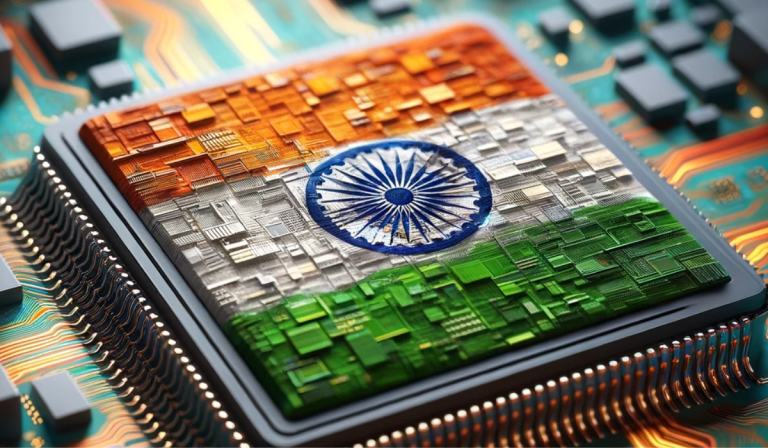
In contemporary world, national power is being determined by the technological capability and semiconductors have emerged as the new critical technology in the digital world. They are fast becoming part of our daily lives through—phones, computers, cars. In terms of defence and security they are also becoming of part of defence arsenal such as radars, missiles and fighter jets of any nation. It has almost become impossible for countries to sustain without semiconductors. Modern technology and defence systems are all dependent on semiconductors. The Indian government realised the significance of semiconductors and started a fundamental program “Semiconductor Mission” in 2021 under the ‘Digital India’ initiative (Press Information Bureau, 2022). It aims to reduce dependency on imports and make India self-reliant in chip designing and manufacturing. The strategy behind it offers big investments and partnerships to set up factories and research centres in various parts of India so that country can become self-reliant (IBEF, 2023). Yet an important question remains: Can this mission truly support India’s ongoing military modernization?
The defence transformation in India under programs like ‘Make in India’ and Atmanirbhar Bharat depends on native technology and secure supply chains. But still 90% of the defence chips are imported. Thios increase the risks and challenges such as wars or political conflicts. The government joined hands with U.S., Japan and Taiwan for a Rs. 76,000 crore semiconductor programs. It shows a recognition that technological self-sufficiency is now the primary element of national security. However, India faces many challenges such as Lack of advanced manufacturing infrastructure, limited technological expertise and dependency on foreign technology for critical equipment and design tools.
Despite these challenges, India’s long-term predictions are promising. With increasing investments in defence technology, policy alignment under “Make in India” and “Atmanirbhar Bharat” and increasing collaborations with countries serve as the backbone of India’s defence electronics and AI-enabled warfare systems. Hence, the semiconductor mission is more than a technology program. It’s another step towards national security and independence. India, like this, can meet its defence needs as well as emerge as a global player in the semiconductor industry (Carnegie Endowment 2025).
Background: Understanding Semiconductors
Semiconductors are the materials whose electrical conductivity lies between that of insulators and conductors. This allows them to control the flow of current in electronic devices. This unique property of semiconductors allows them to serve as the basis of microprocessors, memory chips, sensors and transistors. The most common semiconductor material is used is silicon. Its used to make microchips that control how the devices think and work.
In the civilian sector, semiconductors are essential in smartphones, computers, medical equipment, automobiles, and communication systems. In the military domain, they are even more critical—used in radar systems, missiles, electronic warfare devices, secure communication networks, satellites, and artificial intelligence (AI)–driven defence platforms. Without reliable and advanced chips, even the most sophisticated weapon systems cannot function efficiently (ORF, 2023).
The global semiconductor landscape is very much interdependent and concentrated in a few important regions. The American companies like Intel, NVIDIA and AMD designs the most advanced chip manufacturing companies. TSMC, a Taiwanese company makes the high-tech chips. Japan supplies the essential materials and equipment. South Korea controls the most manufacturing nodes. But China still lags in chip fabrication due to export controls by the United States and its allies. This control makes semiconductors a strategic geopolitical asset. COVID-19 pandemic or the US-China tensions revealed that the semiconductor industry is very sensitive. Control over semiconductor supply chains is now viewed as vital to both economic stability and national security. Hence, India is promoting native manufacturing of these chips. Indian government understood that semiconductor independence is more about strategic power and not just technological advancement in the modern digital world (Circuit Digest, 2023).
India’s Semiconductor Mission
Indian government launched the Semiconductor Mission in 2021. It aims to make the country a global hub for chip fabrication, design and innovation. It shows country’s determination to enter in the global semiconductor manufacturing ecosystem. Since decades, India is excelling chip design and software. But remains dependent on chip manufacturing. But the government recognized the strategic and economic risk of this dependence. Hence it announced a Rs. 76000 crore incentive package to attract global and domestic investors (India Science & Technology, 2023).
The India Semiconductor Mission (ISM) is a dedicated agency under the Ministry of Electronics and Information Technology (MeitY) that handles policy, coordination, and investment facilitation for its missions. It works on several aspects:
- Establishing semiconductor fabrication plants (fabs) and display fabs in India.
- Creating Assembly, Testing, Marking, and Packaging (ATMP/OSAT) facilities to strengthen downstream production.
- Encouraging design-linked incentives (DLI) to support chip design startups and R&D.
- Building a talent pipeline through partnerships with academic and research institutions.
Several major plans have already been introduced. One of the key successes of the mission is Micron Technology. It is a U.S.-based memory chip giant (Carnegie Endowment, 2025). It has committed to building a $2.75 billion assembly and testing plant in Sanand, Gujarat. It is supported by central and state subsidies. Another major proposal came from Vedanta-Foxconn. They initially proposed India’s first semiconductor fab, though it faced challenges related to technology partners. Other initiatives include design-focused collaborations with SPEL, CDIL, and Ruttonsha International Rectifier. International cooperation forms a major part of India’s semiconductor strategy. The India-US Initiative on Critical and Emerging Technologies (iCET) and Quad Semiconductor Supply Chain initiatives along with collaborations with the U.S., Japan, South Korea, and Taiwan are enabling access to cutting-edge lithography tools, materials, and training programs. These partnerships aim to bring in advanced technology, manufacturing know-how, and secure supply chains (CAPSS India Journal, 2022). This mission has a broader goal of strategic resilience and not just industrial development. This will help to strengthen the sectors like defence electronics, space technology and telecommunications for India. While still facing some challenges, India’s semiconductor mission is still a major step towards the semiconductor innovation and strategic power.
The Link: Semiconductors and Military Modernization
In the modern world, modern warfare is not only about armies or weapons. It is also defined by the technology in the defence system. And at the very core of it lies the semiconductors. They are the heart of technology used in modern warfare. In today’s world everything in the advanced military is dependent on chips for computing, sensing, and communication whether they are drones, satellites, radars and electronic warfare equipment (CityLabs, 2023). The efficiency, precision, and sensitivity of these systems are directly determined by the quality of semiconductors they use. India has launched several military modernization programs such as Make in India in Defence, Atmanirbhar Bharat Abhiyan, and the Defence Acquisition Policy 2020. They aim to strengthen native defence manufacturing. However, the country is still dependent on imports of foreign semiconductors. This poses a serious strategic vulnerability. About 70-80 percent of the chips used in communication, missiles and surveillance systems are imported from the U.S, Taiwan and Europe. In future due to natural disaster, war or political conflict the supply could get disrupted. This may lead to delaying in crucial defence projects and compromising operational readiness.
Major global powers now consider semiconductor technology crucial for achieving and maintaining military self-sufficiency. The U.S government launched U.S. CHIPS and Science Act in 2022. It promotes domestic chip manufacturing to secure both civilian and military supply chains. China, under its “Military-Civil Fusion” strategy, integrates semiconductor development into defence production to reduce vulnerability from Western export bans. The U.S. sanctions on Chinese chip firms have already slowed China’s progress in advanced missile and surveillance systems, showing how chip access directly affects military strength. Indian organizations like Defence Research and Development Organization (DRDO), Bharat Electronics Limited (BEL) and Hindustan Aeronautics Limited (HAL) are still dependent on imports for radar and avionics modules. This raises the risk to the cybersecurity making India’s defence sector vulnerable and dependent on other countries (IDSA, 2022). With the production, designing and packaging of domestic chips, these organizations can build safe and customized electronics for the defence. Hence semiconductors are not just small electronic parts. They are the basis of modern defence system and national resiliency. India must succeed in The Semiconductor Mission to make its armed forces strong and independent.
Constraints and Prospects
Even though India’s semiconductor mission has great potential, there are still a number of significant obstacles standing in the way. The most significant of these is the absence of fabrication knowledge and a corresponding ecosystem. One of the most complicated industrial processes in the world is the production of semiconductors. It requires accuracy, extremely clean conditions, and decades of process expertise. Semiconductor Complex limited (SCL) in Chandigarh was one of the previous attempts made by India. It showed how difficult it is to maintain Previous attempts made by India, such as the Semiconductor Complex Limited (SCL) in Chandigarh, demonstrate how challenging it is to maintain competitiveness in the absence of a strong integrated supply chain for materials and equipment. The high cost and power consumption of fabs are equally urgent issues. Building a state-of-the-art semiconductor fabrication facility can cost up to $10 billion and requires a lot of water and steady electricity, two resources that are still scarce in India (IAS Gyan, 2023). States find it difficult to meet the infrastructure requirements for advanced-node production, even when they provide generous incentives.
Progress is made even more difficult by the talent gap. Annual production of engineers is high, but few are trained critical semiconductor-specific fields like wafer process control, lithography, and VLSI design remains rare. There is a skill gap in terms of technicians and process engineers, which are essential for preserving fab yields and dependability. Furthermore, the access to technology is hampered globally by export limitations and technology embargoes. India’s ability to advance into cutting-edge production due to restraint on selling sophisticated lithography tools, particularly EUV technology, to nations outside of particular alliances. Another hurdle is the implementation part which is also hampered internally by ambiguous policies and bureaucratic hold-ups. As for example, the regulatory barriers and disputes over technology partnerships caused the widely reported Vedanta-Foxconn project to be repeatedly delayed and restructured. This eventually leads to weakened investor confidence. Lastly, there is still concerns related to strategic dependency. India will continue to rely on foreign design software, intellectual property cores, and high-end equipment from the US, Japan, and the Netherlands even if it is successful in setting up fabrication facilities. This dependence emphasizes that a complete value chain is needed for semiconductor self-reliance, not just factories.
Notwithstanding the above-mentioned challenges, India’s semiconductor mission offers incredible potential for advancements in technology, the economy, and defence. Cooperation is facilitated by the changing geopolitical realignment under frameworks like the QUAD partnership, which consists of the US, Japan, Australia, and India. Taiwan offers unmatched fabrication experience, Japan offers materials expertise, and the United States brings cutting-edge design and manufacturing technology. By working together strategically, these countries can diversify global supply chains away from China and quicken India’s technological learning curve (Carnegie Endowment, 2025). The creation of semiconductor development industry specifically suited for domestic military systems is one particularly stimulating path. It should be noted that secure and dependable chips are essential as India looks forward to widening its horizons in projects like the Tejas fighter jet, Akash missile system, and various other UAV programs. India’s defence infrastructure would be more resilient in times of conflict if defence-grade microprocessors were produced domestically. This would also lessen vulnerabilities to cyber espionage and reduce India’s dependency on foreign producers.
In this transition, the roles of startups and academia are equally important. Native chip designs and fabrication research have already been produced by Indian universities and institutions like IITs, IIScs, and the Semiconductor Research Centre. MeitY’s “Chips to Startup” (C2S) program supports startups in India that are developing IoT solutions, automotive chips, and RISC-V-based processors. A sustainable innovation ecosystem can be created with collaboration between agencies and through government assistance, startups, and research institutions. Long-term advancements in semiconductor industry will bolster India’s strategic independence and promote ‘Make in India.’ Self-reliance in semiconductor industry will enable the nation to manage the digital infrastructure supporting its defence and economic activities. India can take a key place in the global technology value chain by establishing itself as a centre for chip design, testing, and packaging. Furthermore, India could become a pillar of regional stability and next-generation military modernisation if the semiconductor mission is carried out successfully.
References
- India Brand Equity Foundation (IBEF), “India’s Emergence as a Semiconductor Manufacturing Hub,” IBEF Blog, 2024, https://www.ibef.org/blogs/india-s-emergence-as-a-semiconductor-manufacturing-hub.
- Drishti IAS Editorial, “Semiconductor Industry in India,” Drishti IAS Daily News Analysis, 2023, https://www.drishtiias.com/daily-updates/daily-news-analysis/semiconductor-industry-in-india.
- Anirudh Suri, “Lessons from India’s Past for Its Semiconductor Future,” Observer Research Foundation (ORF), 2023, https://www.orfonline.org/expert-speak/lessons-from-indias-past-for-its-semiconductor-future.
- Konark Bhandari, “India’s Semiconductor Mission: The Story So Far,” Carnegie Endowment for International Peace, 2025, https://carnegieendowment.org/research/2025/08/indias-semiconductor-mission-the-story-so-far?lang=en.
- Circuit Digest Editorial, “Imperious Historical Facts That Forced India into Semiconductor Manufacturing,” Circuit Digest, 2023, https://circuitdigest.com/article/imperious-historical-facts-forced-india-semiconductor-manufacturing.
- Press Information Bureau (PIB), Government of India, “Cabinet Approves Programme for Development of Semiconductors and Display Manufacturing Ecosystem in India,” PIB Press Release, December 2022, https://www.pib.gov.in/PressReleasePage.aspx?PRID=1885367.
- India Science, Technology and Innovation Portal, “India Semiconductor Mission (ISM),” Department of Science and Technology, 2023, https://www.indiascienceandtechnology.gov.in/st-visions/national-mission/india-semiconductor-mission-ism.
- Arjun Gargeyas, “India’s Strategic Push for Semiconductor Manufacturing,” CAPSS India Journal (DD Journal, January–March 2022), 2022, https://capssindia.org/wp-content/uploads/2022/07/DD-Journal-January-March-2022-Arjun-Gargeyas.pdf.
- CityLabs, “Military Semiconductor Applications,” CityLabs Tech Articles, 2023, https://citylabs.net/military-semiconductor-applications/.
- Institute for Defence Studies and Analyses (IDSA), “India’s Strategic Push for Semiconductor Manufacturing,” IDSA Issue Brief, 2022, https://www.idsa.in/publisher/issuebrief/indias-strategic-push-for-semiconductor-manufacturing.
IAS Gyan Editorial, “Semiconductor Sector in India: Challenges and Opportunities,” IAS Gyan Current Affairs, 2023, https://www.iasgyan.in/daily-current-affairs/semiconductor-sector-in-india-challenges-and-opportunities.